Listing photos guide · 6 min read
Room scene vs white background vs close-up: what each wall art photo shows
Short answer: Room scenes, plain views and close-ups answer different questions. Try a room scene first when it is the clearest accurate view of your product, and check it at thumbnail size. Use one plain or white background image for the full, uncropped artwork, and a close-up for the frame, mat or canvas edge. On Etsy, add an unedited photo of a real sample too: most listings need one, with an exception for authorised print-on-demand mockups.
Buyers of wall art ask three questions: will it suit my home, what exactly is the picture, and what will arrive? A room scene, a plain image and a close-up each answer one. This guide matches each photo to its job; the canvas print mockup generator makes the room scenes.
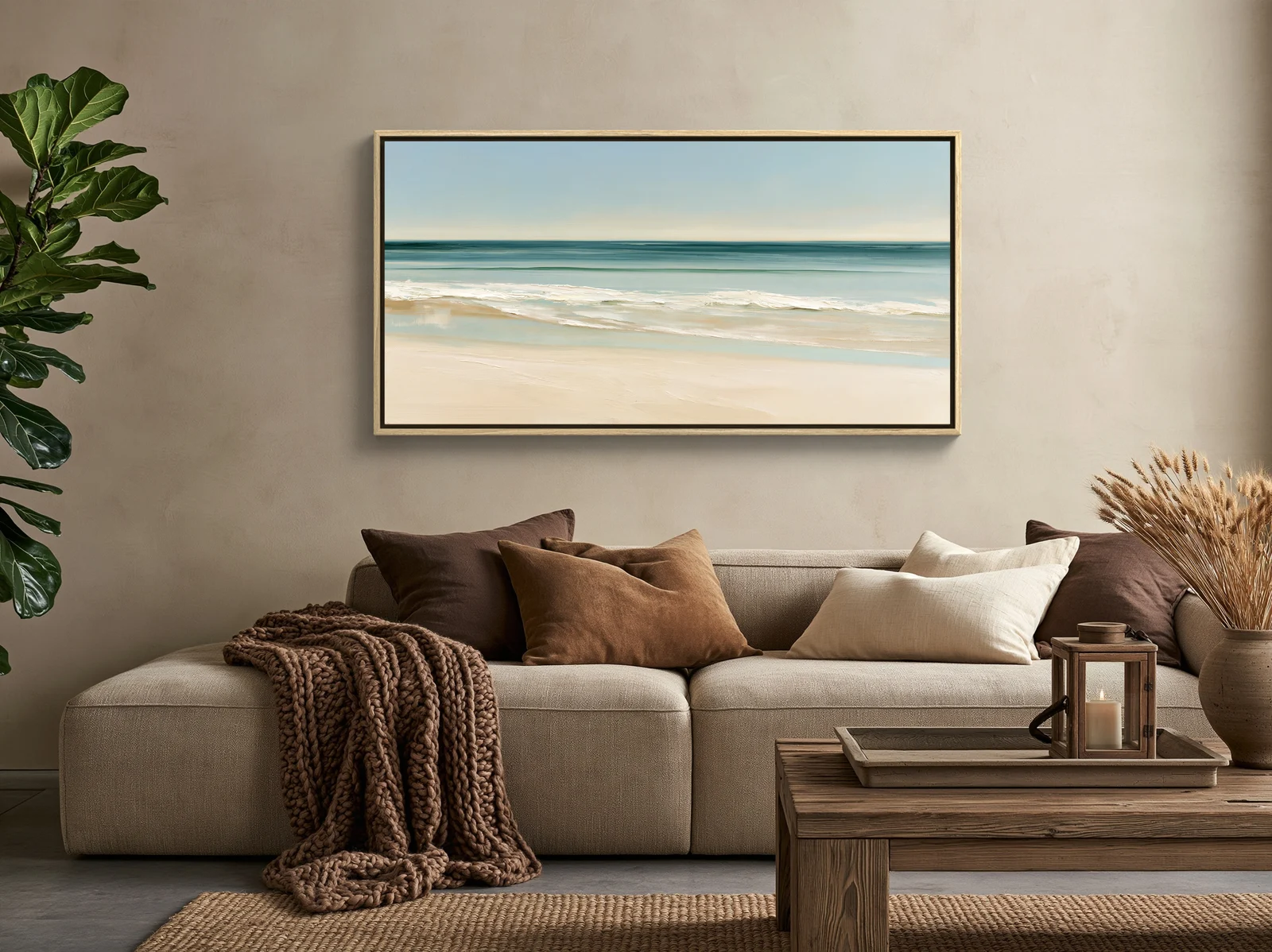
The three photos compared
| Room scene | White or plain background | Close-up | |
|---|---|---|---|
| Answers | Will it suit my home? How big is it? | What is the whole picture? | What will arrive? Is it good quality? |
| Best position | First photo, then 3–5 alternatives | Third or fourth | After the scale photo |
| Strength | Emotion, style, scale | Every edge of the art, no styling | Frame finish, mat, canvas edge, texture |
| Risk | A busy room hides the art; a wrong size misleads | Looks flat and small in a search grid | A close-up of a mockup isn't proof of quality |
| Make it with | A room mockup | Your artwork file | A photo of a real sample |
This guide does not establish a sales lift for one photo type over another. What is clear is the job each photo does, and that a listing missing one leaves a question unanswered.
Room scenes: the first photo
A room scene sells the idea of the art on the buyer's wall. It shows the mood, the frame and a believable size next to furniture. In a search grid full of wall art, it is also what makes your thumbnail look like a finished product rather than a file.
- Lead with a calm room where the art is large and central; see the crop-safe Etsy thumbnail.
- Add three to five alternative rooms so different buyers see their own home.
- Show the product you sell: a stretched canvas, a floating-frame canvas or a framed print with a mat look different. The guide to canvas vs framed print mockups shows each.
White or plain background: the whole artwork
Room scenes shrink the art and add styling. One plain image lets buyers see the full composition: every edge, every corner and the broad palette. It is still a screen image, not a physical colour proof. It is the image a buyer zooms into.
- Use your artwork file at its true ratio, on white or a light neutral, with a little space around it.
- Keep a plain view among the listing images. Compare the plain image and room view at the actual thumbnail size; use the one that shows your product most clearly.
- On Shopify, use the same shape as your other main images. Shopify says a consistent aspect ratio keeps product images the same size on collection pages (Shopify, checked 2026-10-29).
For printables, this image matters more: it is the preview of the file the buyer actually receives. Etsy asks digital listings with a visual component to include a preview of the actual content (Etsy). See mockups for printable wall art.
Close-ups: the product
A close-up answers "what exactly will I get?". For each product, show the detail buyers can't see from across a room:
| Product | Show in the close-up |
|---|---|
| Floating-frame canvas | The gap between canvas and frame, the frame face and corner, the finish |
| Stretched canvas | The side: image wrap, mirror edge or colour edge, and the depth |
| Framed print | The mat width, the frame corner, and glazing if there is any |
| Poster | Paper surface and finish; how it is packed |
The most convincing close-up is a photo of a sample you ordered. It also covers Etsy's rule below. To take it:
- Use daylight from a window, without direct sun on the glass or canvas.
- Shoot one frame corner straight on, then one from the side to show depth or the floating gap.
- Hold the phone level with the art so the frame doesn't look tapered.
- Don't filter it: this is the photo buyers trust to show the true finish.
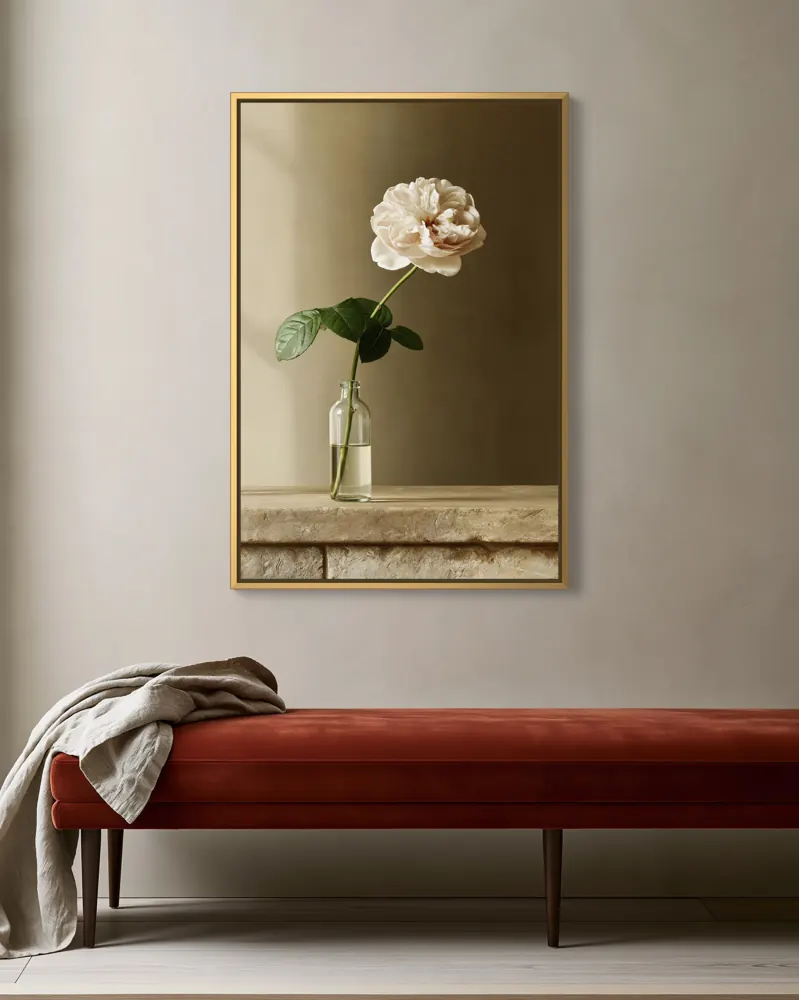
What changes by type of shop
| You sell | Room scenes | White or plain image | Close-up |
|---|---|---|---|
| Printables (digital downloads) | A simple frame with a mat, as buyers will frame it | Essential: a preview of the actual file | Optional: detail of the artwork |
| Print-on-demand framed canvas or prints | Lead with them, in the provider's frame and finish | One image of the whole artwork | Your sample, or the provider's authorised mockup |
| Prints you make and ship | Lead with them | One image of the whole artwork | Your own photos of the real item |
| Original paintings | A few, for scale and mood | A straight-on photo of the painting itself | Several: texture, edges, signature, back |
The more unique the item, the more its real photos matter. For a print sold in many sizes and frames, room scenes do most of the work.
Etsy's unedited photo rule
From Etsy's help page on listing image requirements (checked 2026-10-29):
- Etsy requires at least one unedited photo for most items: the actual item against a real background, not edited or changed in any way.
- Print-on-demand items may use a stock photo mockup if its owner has authorised its use.
- Other photos may be edited, including with AI, for light, colour, crop or background, as long as the item doesn't look different.
- The first photo should be the clearest, most realistic representation of the item the buyer will receive.
So a room mockup can lead if it shows the product accurately; if your sample photo is the clearest view of what arrives, Etsy's wording favours putting that first. A white-background image shows the art, and the sample photo covers the unedited requirement. Read Etsy's page for how it applies to your product.
A photo order that uses all three
- Room scene (hero)
- Room scene with furniture for scale
- White or plain background: the whole artwork
- Close-up of the frame, mat or canvas edge
- Unedited photo of your sample
- Size guide image
- Three to five alternative room scenes
The full listing photo set fills the rest. WallMock makes the room scenes: your exact artwork as framed canvas (floating frame), stretched canvas, framed print, with or without a mat, metal print (art on a frameless aluminium panel), aluminum framed print (black, gold or silver), with or without a mat in 500+ curated rooms.
Read next: the listing photo set I use for every design, the crop-safe Etsy thumbnail and listing mistakes that cause returns.
Sources
- Etsy Help: How listing image requirements apply to your listings, checked 2026-10-29
- Shopify Help: Product media types, checked 2026-10-29