Listing photos guide · 6 min read
Wall art size guide image: how to make the "how big is it?" photo
Short answer: A wall art size guide image shows every size you sell side by side, drawn in proportion to each other, each labelled in inches and centimetres. Show only sizes in your artwork's ratio, say whether the numbers are the artwork or the framed outside size, and pair it with one room photo above familiar furniture for a sense of scale, not a measured wall. Make it the same shape as your first photo, and repeat the sizes in the description.
"How big is it?" is a question every wall art buyer has, and a labelled size comparison makes the offered dimensions easier to inspect. This guide covers the chart, the scale photo and the numbers, with an Etsy mockup generator for the room photos.
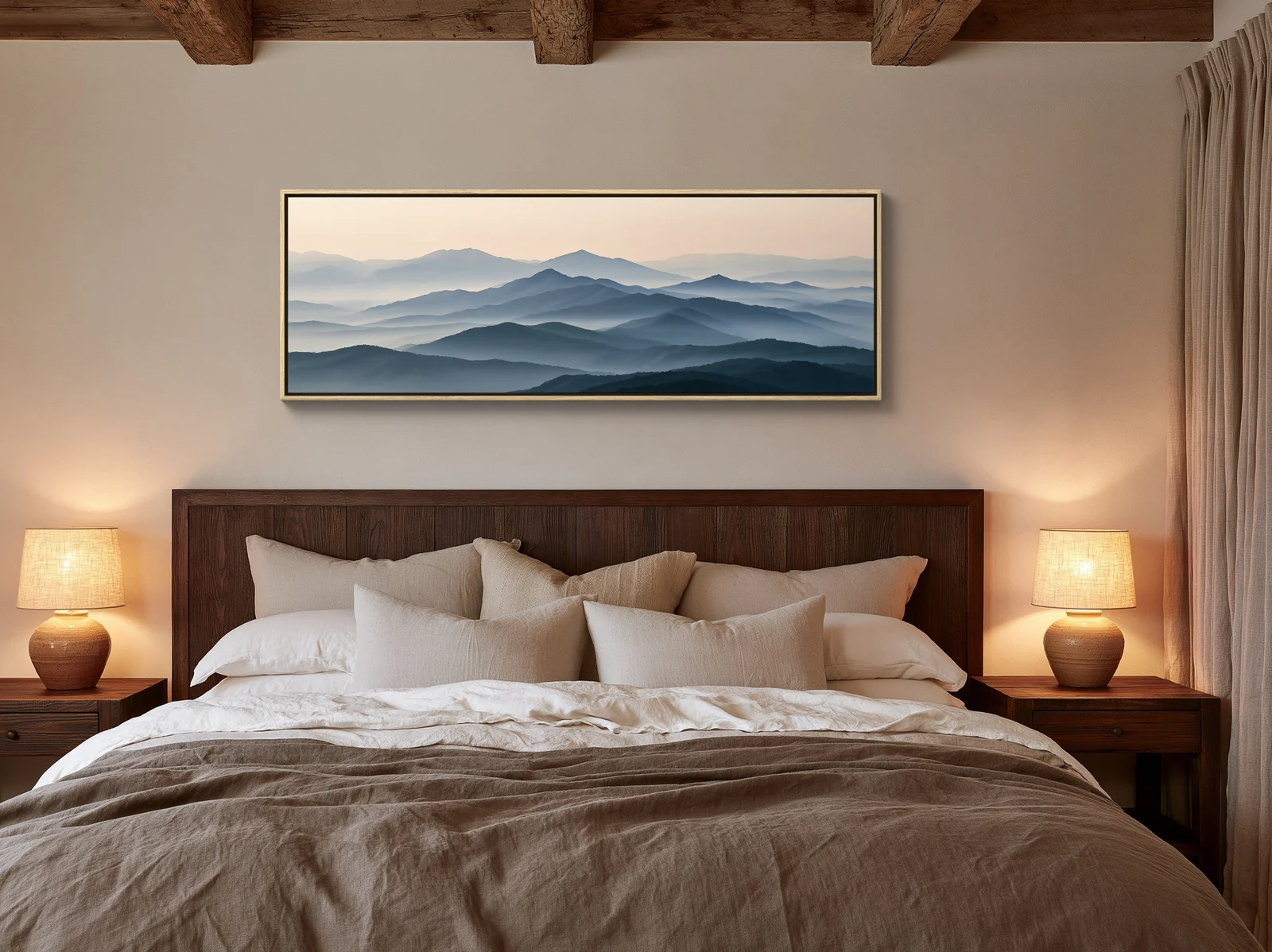
Two images do the job
Buyers judge size two ways, so show both:
| Image | What it shows | Answers |
|---|---|---|
| Size guide (chart) | Every size you sell, side by side, in proportion, labelled in inches and cm | "How much bigger is 24 × 36 than 16 × 24?" |
| Scale photo | One size above a sofa, bed or sideboard | "Will it look right in my room?" |
A room photo alone can't give exact sizes, because the room's real dimensions are unknown to the buyer. A chart alone feels abstract. Together they answer the question. Put the scale photo second in the listing and the size guide third, as in the listing photo set.
What to put on the size guide
- Only sizes you sell. If you offer four sizes, show four. A chart with sizes you don't stock invites the wrong order.
- Only sizes in your ratio. A 2:3 file fits 8 × 12, 12 × 18, 16 × 24, 20 × 30 and 24 × 36 in without cropping. A 16 × 20 in print from a 2:3 file loses part of the art. Check your family with the print size calculator.
- Both units. Inches first for US buyers, centimetres beside them: 16 × 24 in is about 41 × 61 cm.
- Artwork size or outer size, stated. Write "artwork size" or "framed size" on the image itself.
- The real artwork. Draw your own art at each size rather than grey boxes, so buyers see their piece.
- Drawn in proportion. A 24 × 36 in rectangle should be three times as tall as an 8 × 12 in one.
Artwork size vs framed outer size
Check this distinction before listing a framed product. A frame, a floating gap or a mat makes the piece bigger than the print:
| Product | Outer size | Worked example (example frame widths) |
|---|---|---|
| Stretched canvas | Same as the canvas | 16 × 24 in canvas: 16 × 24 in |
| Floating-frame canvas | Canvas + 2 × (gap + frame face) | 16 × 24 in canvas, 0.25 in gap, 0.5 in face: 17.5 × 25.5 in |
| Framed print with mat | Print + 2 × mat + 2 × frame face (about) | 12 × 18 in print, 2 in mat, 0.75 in face: about 17.5 × 23.5 in |
Gap, face and mat widths differ by provider, so take them from your provider's product page or measure a sample. The frame and mat size calculator works out a matted size for you. If you list framed sizes, say so in the variation names too.
The scale photo
Put one size above furniture buyers know: a sofa, a bed or a sideboard. Use your most popular size, and say which size it is in the caption or the photo description.
- Pick furniture that suits the size: a large piece above a sofa, a small one above a console or desk.
- Show the art at a believable width. Interior guides often suggest art about two thirds to three quarters of the width of the sofa or bed below; the art size over a sofa tool works it out.
- Don't change the size from photo to photo. Keep one size in all room photos and let the size guide show the others.
Room mockups are a feel for scale, not a measurement. Etsy's rules ask that every listing photo accurately represents what the buyer receives (Etsy), so never show a size you don't sell.
Shape, size and description
- Shape: Etsy says the first listing photo should be landscape or square, and that it sets the shape of the photos that follow (Etsy, checked 2026-10-29). Make the size guide the same shape as your first photo, so it shows the same way as the rest.
- Pixels: at least 2000 px on each side, Etsy's recommendation, so the labels stay sharp when buyers zoom.
- Text: large enough to read on a phone. If a label is hard to read at full width, it is unreadable in the app.
- Alt text and description: Etsy's alt text can be up to 250 characters, and for size charts it suggests describing the chart in detail or putting the sizing in the listing description (Etsy). Do both: list every size in the description.
A sizes block for the description can be this simple (example frame widths, as in the table above):
Artwork sizes: 12 × 18 in (30 × 46 cm), 16 × 24 in (41 × 61 cm), 24 × 36 in (61 × 91 cm). The floating frame adds 1.5 in to the width and to the height: a 16 × 24 in canvas measures 17.5 × 25.5 in (44 × 65 cm) outside.
WallMock's size guide image
WallMock's studio has a Size guide image button for the artwork you're working on. Enter the sizes you actually sell. It draws your artwork at those sizes, side by side and in proportion, labelled in inches and centimetres. If you enter none, it uses example sizes for the shape. For a 2:3 piece in inches, the example sizes are 8 × 12, 12 × 18, 16 × 24, 20 × 30 and 24 × 36.
It is a relative size comparison, not a picture of your art measured on a wall. The sizes are shown without a frame; fallback sizes are labelled as examples, and a frame or mat adds to the outer size. Check the sizes against the ones you actually sell before you publish, and add the outer sizes in your description if you sell frames. The image is square and 2000 px on each side, made on your device. If your first listing photo is landscape, place it on a landscape background with space either side before you upload.
For the scale photo, choose a room in WallMock with a sofa, bed or sideboard.
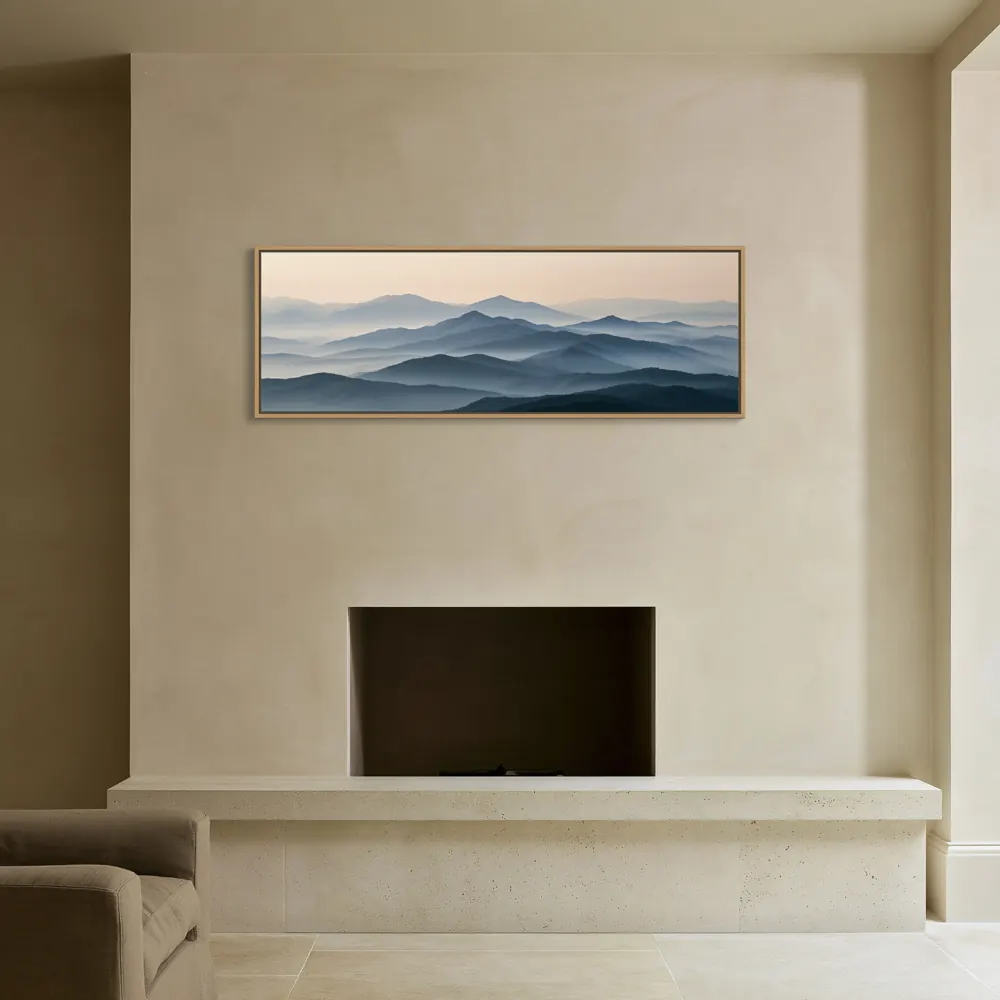
Check a three-size chart before upload
Suppose you sell a 2:3 design at 12 × 18, 16 × 24 and 24 × 36 inches. Enter only those offered sizes, export the chart and check that 24 × 36 is twice the width and height of 12 × 18. Then read every label on a phone-sized preview. The print size calculator checks the ratio family; it does not verify your supplier’s stock.
If a floating frame is included, add the supplier’s outer dimensions separately. Do not rename a room’s default placement “24×36” without checking the size settings: room scale is estimated. Our testing page explains which checks establish artwork fidelity and which physical claims still need a sample.
Read next: the print size calculator, how high to hang art over a sofa or bed and listing mistakes that cause returns.
Sources
- Etsy Help: Requirements and best practices for images, checked 2026-10-29
- Etsy Help: How to add a text alternative to your listing images, checked 2026-10-29
- Etsy Help: How listing image requirements apply to your listings, checked 2026-10-29