Etsy guide · 6 min read
Give a whole Etsy collection a consistent look
Pick the room for your first photo, a second room for context and one close view of the product. Save that lineup and use it again for the next design, so people can browse a collection without the photos changing style on every listing.
Changing rooms, frames and light on every listing can make a collection harder to compare. A shared room set gives you a repeatable presentation. This guide shows how to choose that look once and reuse it, which is what WallMock's bulk mockup generator is built for.
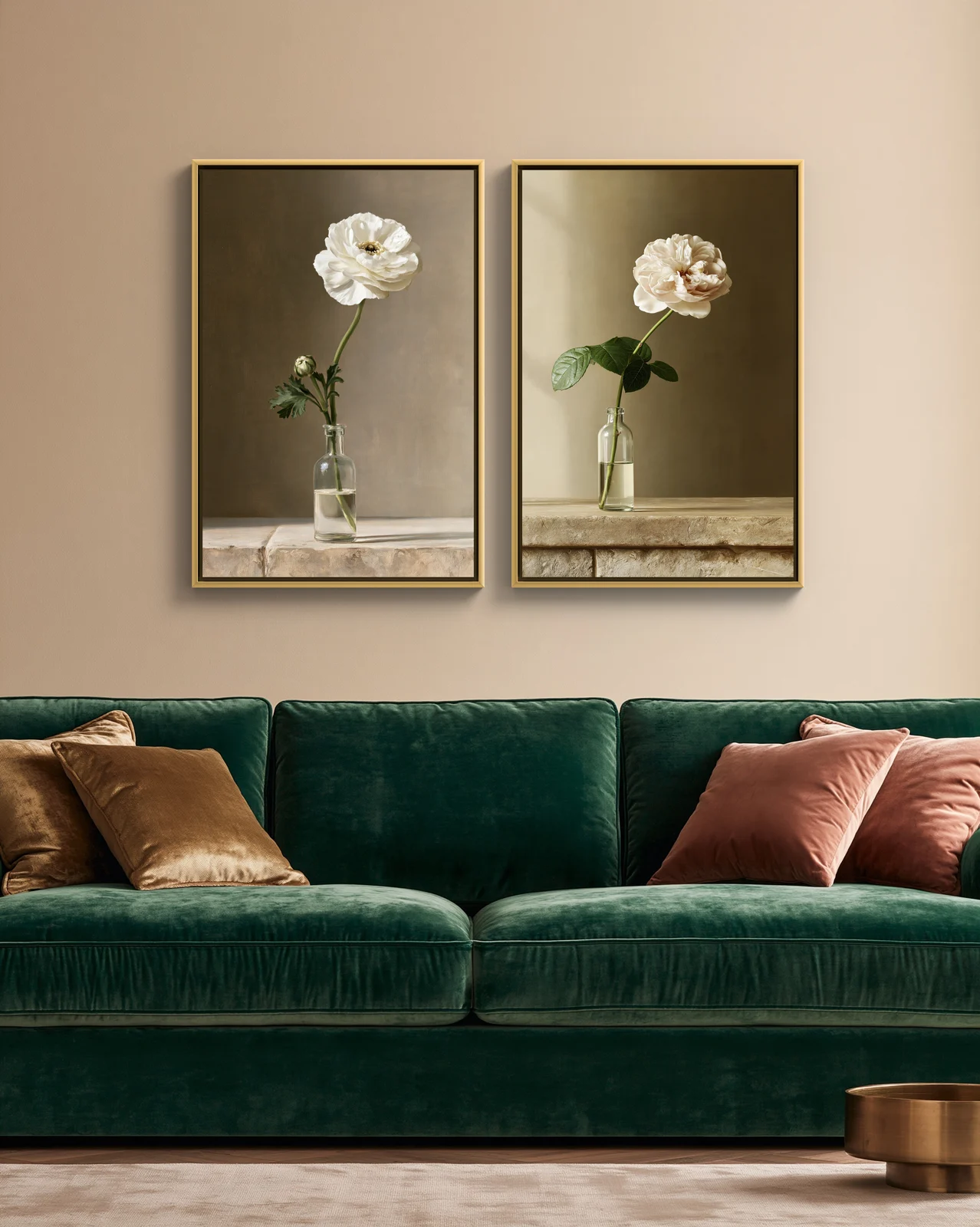
What a room set is
A room set is the short list of rooms, plus one frame look, that every artwork in a collection goes through. For a typical listing it covers:
| Role | How many | What it does |
|---|---|---|
| Hero rooms | 2–3 | The first photo. Calm, the art large and central. Rotate between them across the collection |
| Scale room | 1 | The art above a sofa, bed or sideboard at your main size |
| Alternative rooms | 2–3 | A bedroom, a dining room, a bolder wall: different homes, same family |
| Frame look | 1 | The product and finish you lead with, for example natural oak floating-frame canvas |
That is five to seven rooms per collection, not sixty. The rest of each listing (size guide, close-up, sample photo) follows the listing photo set.
Choose rooms for the collection, not for one artwork
Pick the set by what the whole collection shares:
- Palette. A soft coastal collection wants light, airy rooms; a moody botanical collection can live on deep green or charcoal walls. Put the palest and the darkest piece in each room before you commit.
- Shape. A collection of 2:3 portraits needs walls with height; a panorama collection needs long sofas and sideboards. If a collection mixes shapes, choose rooms that suit each shape and keep them in the same style. Our guide to panoramic and tall art mockups covers the awkward ones.
- Product. Choose rooms that suit the product you sell. A floating-frame canvas and a matted framed print can share a room, but the frame look should match the listing.
- Buyer. Nursery prints belong in nurseries and calm bedrooms; office prints in studies. A room set is a promise about where the art will hang.
For the balance of plain and coloured walls, the guide to room styles and wall colours suggests a mix of neutral, tinted and bold rooms.
Keep it consistent, but not identical
Consistency is about family resemblance: the same light, the same kind of wall, the same frame. It is not the same photo on every listing. In a search grid, twenty identical rooms look like one product twenty times.
- Rotate two or three hero rooms across the collection.
- Keep the hero rooms in one style and colour family, so the rotation still looks planned.
- Keep the frame look fixed within a collection. If you sell several finishes, lead with one and show the rest as options.
- Use the same artwork size in the same room, so pieces compare fairly.
Etsy says your first listing photo sets the shape of the photos that follow (Etsy, checked 2026-10-29). Keep the first photo's shape the same across the collection too, for example always landscape.
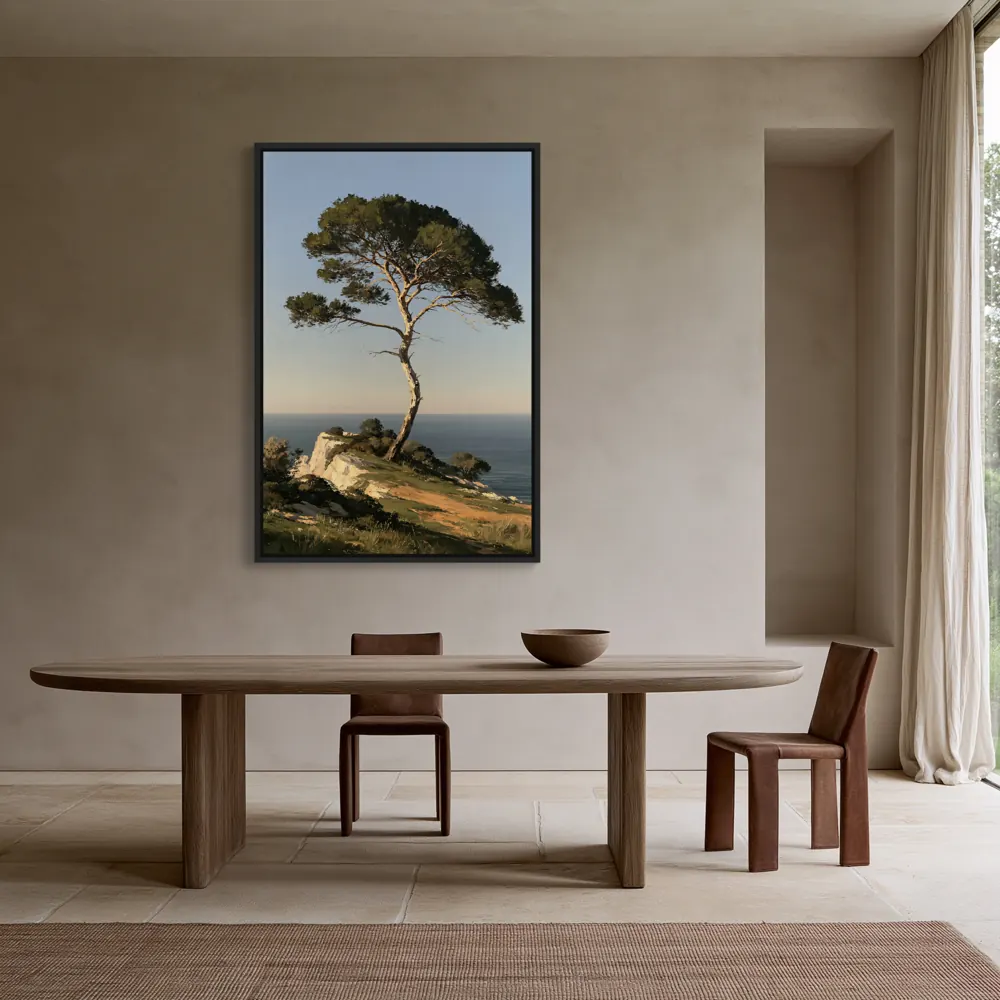
An example plan for three collections
| Collection | Hero rooms | Scale room | Alternatives | Frame look |
|---|---|---|---|---|
| Coastal landscapes (3:2 and panoramas) | Light living room; linen bedroom | Long sofa | Dining room; sea-view room; pale hallway | White or natural oak floating frame |
| Moody botanicals (2:3 portraits) | Deep green study; plaster dining room | Bed with upholstered headboard | Kitchen wall; charcoal reading corner | Black floating frame or walnut |
| Black-and-white photography (mixed) | Grey-blue living room; white bedroom | Sideboard | Office; entry wall; a bold colour wall | Black framed print with a white mat |
Write your plan down once, with the exact room names, and every new artwork in the collection follows it. When you launch a new collection, start a new plan rather than stretching the old one.
When to change the look
A room set isn't forever. Change it on purpose, not listing by listing:
- A new collection. New palette or new buyer, new room set. Keep the shop-wide habits (light, frame style, first-photo shape) so the shop still feels like one brand.
- A season. Try one seasonal room as an alternative or temporary hero where it suits the artwork, then restore the year-round image. The wall art selling calendar shows when.
- A bestseller. If one piece sells far better than the rest, give it an extra room or two, but keep its hero photo in the collection's family.
- Stats tell you. Compare the actual metrics available in your shop. Listing views are not search impressions. If testing a different hero, keep a record of the dates, visits and orders, and avoid drawing conclusions from a few visits.
Reuse it in WallMock
- Favourite rooms. Heart the rooms in a collection's set, so the next artwork starts from the shortlist instead of the whole library of 500+ rooms.
- A saved look. Save the product, finish and mat choices as a favourite setup, and reuse it for the collection.
- Whole collections at once. Add every artwork in the collection, and each is made in every chosen room. Sets of 2, 3 or 4 work too.
- Honest options. Each room lists the products it supports, and a combination a room doesn't support is marked unavailable rather than forced.
The bulk mockup workflow checklist covers previews, the image count and naming the downloads.
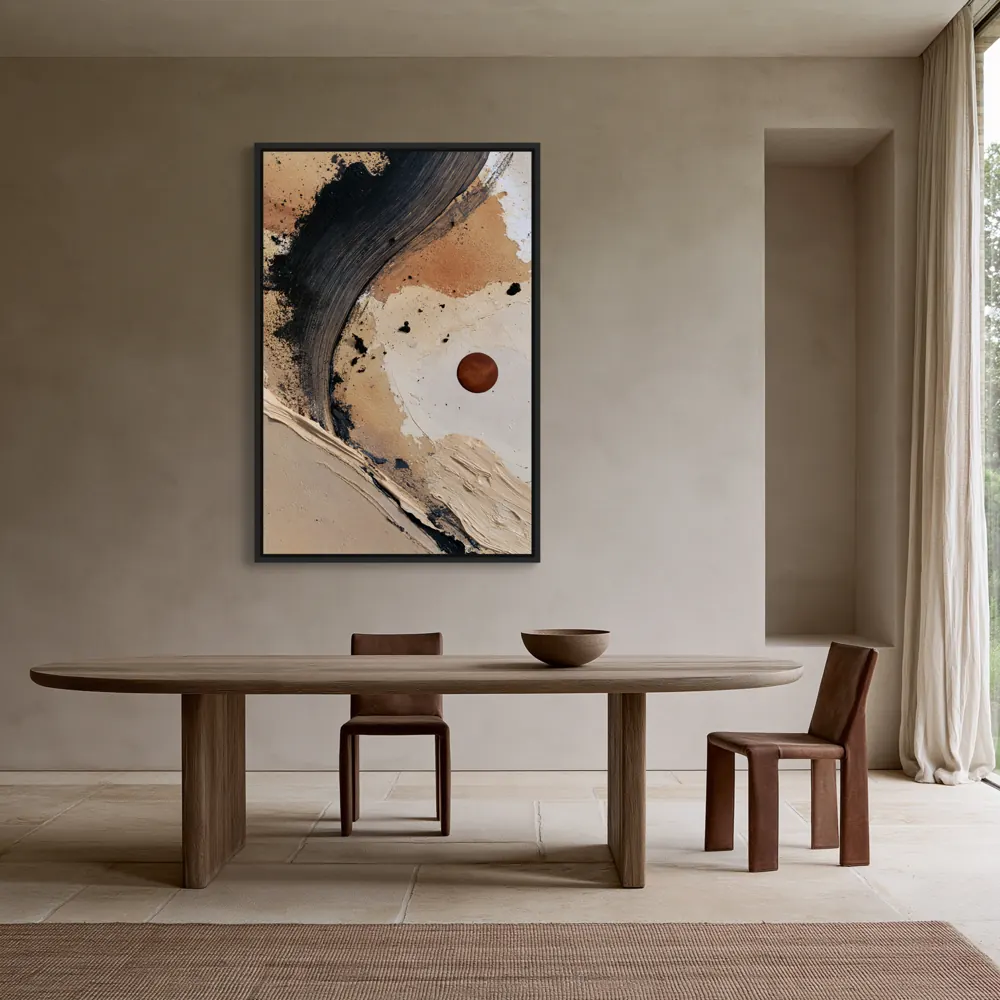
Check the set before you commit
- Put the palest, the darkest and the most colourful artwork through every room in the set.
- Drop any room where one of them disappears into the wall or fights the furniture.
- Look at the hero photos side by side at thumbnail size. They should look like one shop.
- Check that each hero photo still shows the whole artwork after Etsy's crops; see the crop-safe Etsy thumbnail.
Read next: the bulk mockup workflow checklist, room styles and wall colours and the crop-safe Etsy thumbnail.
Sources
- Etsy Help: Requirements and best practices for images, checked 2026-10-29