Product guide · 7 min read
Metal print vs canvas vs framed print: which to sell, and how to show each
Short answer: Canvas has a soft woven texture and no glare, and suits paintings and warm, textured art. A framed print is the most traditional, with the option of a mat and glazing, and suits illustration, line art and fine-art photography. A metal print is the sharpest and most saturated, with a modern frameless edge, but gloss surfaces reflect light. Choose by the art and the buyer’s room, offer each as its own listing or variant, and show each product’s own edge in the photos.
- CanvasWoven texture, no glass, little glare. Stretched or in a floating frame; depth shows from the side.
- Framed printPaper behind glazing, optional mat. Crisp detail; glazing can reflect.
- Metal printAluminium panel, frameless. Sharpest detail and strongest colour; gloss reflects.
- Same file, three productsYour artwork’s ratio decides the sizes; the product decides the surface and the edge buyers see.
Most wall art shops start with one product and add others later. Each one changes how the same artwork looks, what the buyer expects to receive and what your photos must prove. Below, one artwork is shown as a floating-frame canvas, a stretched canvas, a framed print and a metal print in the same room, followed by the differences that matter when you sell them.
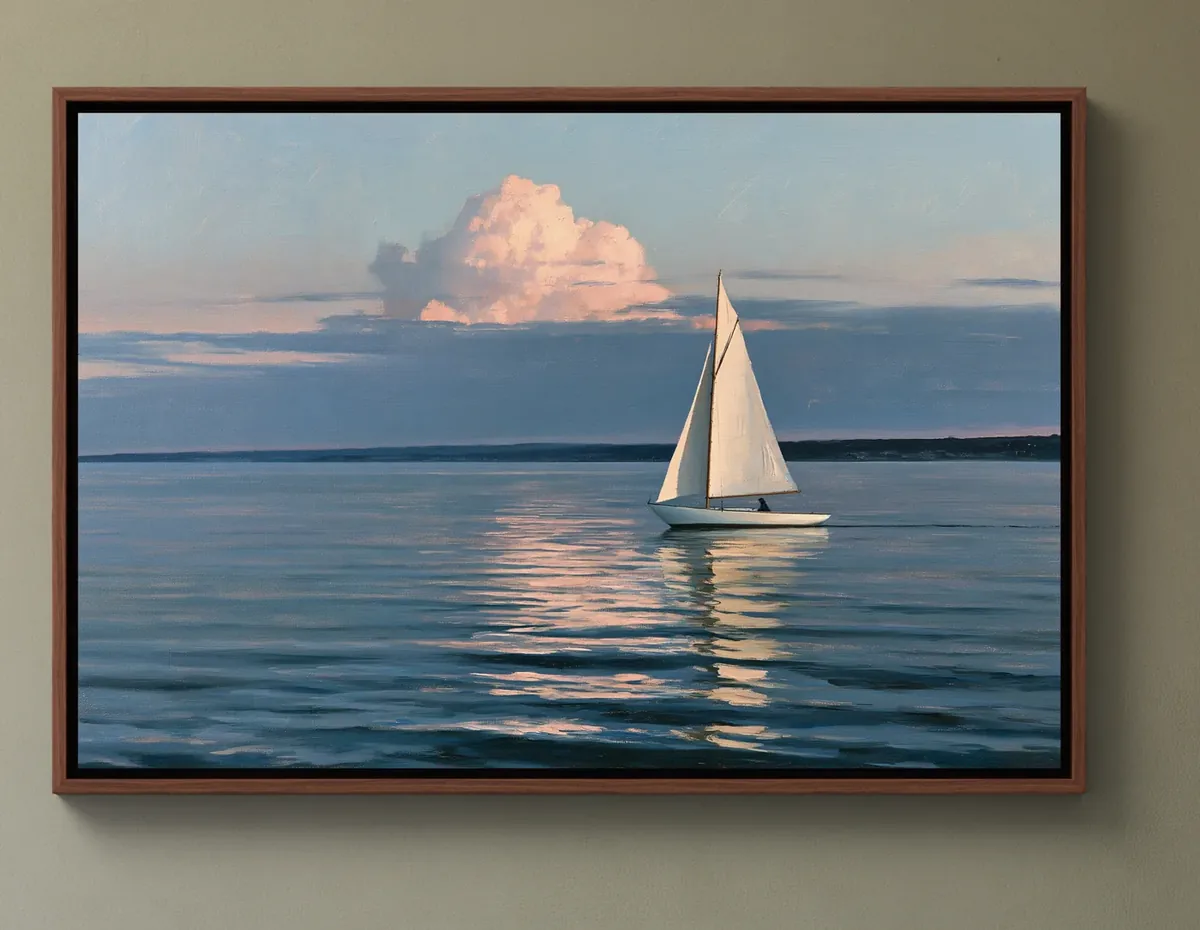
One artwork, four products
Same file, same room, same light. Only the product changes.
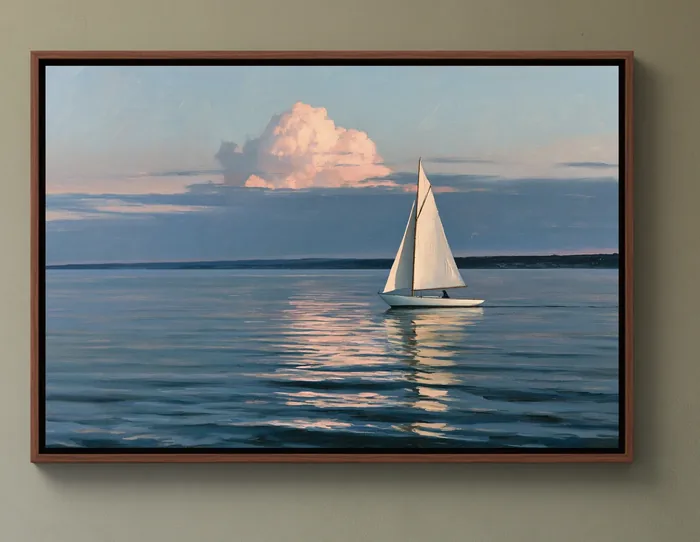
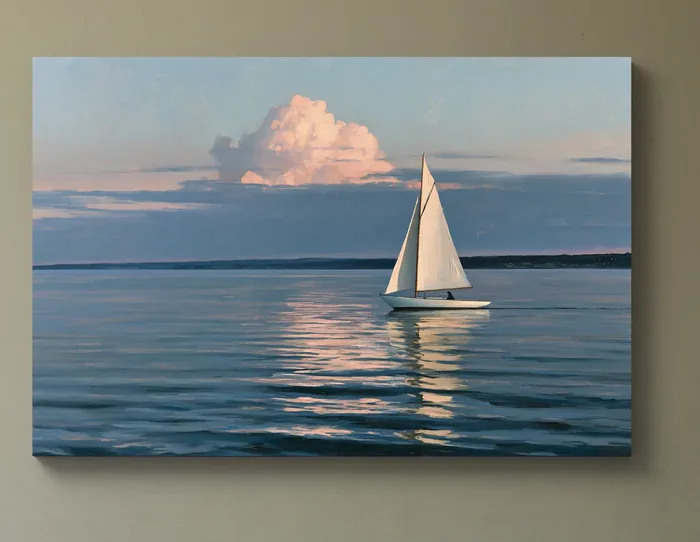
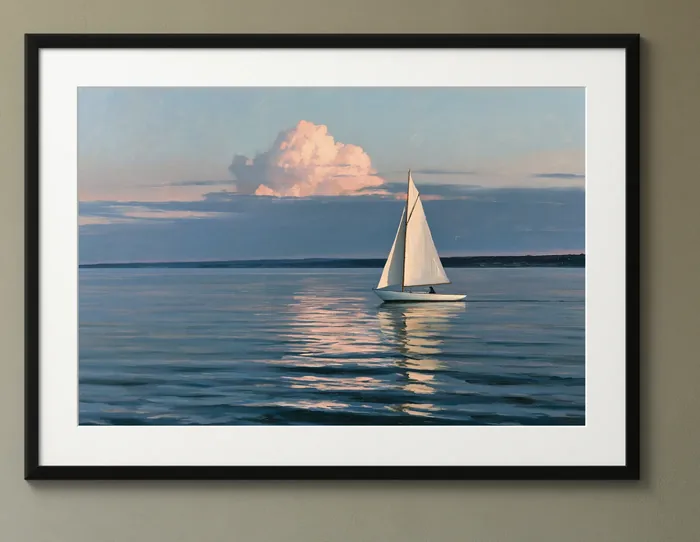
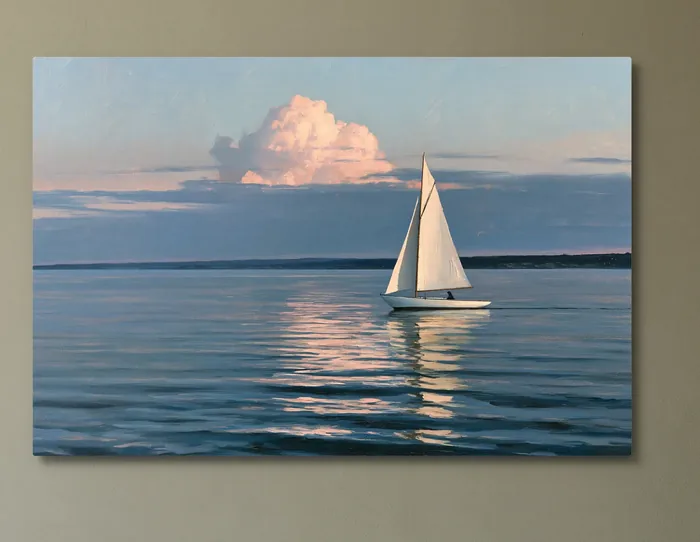
Front-on, the stretched canvas and the metal print look alike: both are frameless and cast a shadow. The differences buyers care about are the surface, which shows up close, and the edge, which shows from the side. That is why each product needs its own close-up photo.
The differences, side by side
On a phone, swipe the table sideways.
| Canvas | Framed print | Metal print | |
|---|---|---|---|
| Surface | Woven texture, satin or matte | Paper (matte, luster or fine-art) behind acrylic or glass | Smooth coated aluminium: gloss, matte or lustre depending on the supplier |
| Glare | Low | From the glazing, unless the supplier offers anti-reflective glass | High on gloss, low on matte |
| Detail and colour | Softened slightly by the weave | Crisp; mats add contrast | Sharpest, with deep blacks and strong colour |
| Edge seen from the side | Canvas depth (about 0.75 in or 1.5 in) and the wrap, or a floating frame | Frame profile | A thin panel floating off the wall |
| Suits | Paintings, landscapes, textured and warm art; large sizes | Illustration, line art, typography, photography, gallery walls | Photography, saturated and graphic art, modern rooms |
| Watch for | Cropping on image-wrapped edges; depth claims | Mat shown but not shipped; reflections in photos | Silver or brushed bases showing through white areas; shipping limits |
| What the close-up must show | Edge and depth, or the floating-frame gap | Frame corner, mat bevel | Edge, corner and the surface finish |
Canvas depths and wraps are covered in canvas depth 0.75 vs 1.5 inch and canvas wrap edges; metal surfaces in glossy vs matte metal prints.
Which to sell first
- Painterly or textured art (oil, acrylic, watercolour washes): canvas, and a floating frame if you want a finished, higher-priced look. See framed canvas vs stretched canvas.
- Line art, illustration, typography and botanical studies: a framed print, with a mat if the art has space around it.
- Photography, night skies, saturated abstracts: metal, or a framed print on luster paper if you want glazing and a mat.
- Bathrooms and kitchens: buyers often ask about humidity. Repeat only what your supplier states about its product; Printful, for example, describes its metal print as corrosion-resistant aluminium.
Costs differ by product, size and supplier, so compare your supplier’s base price for the same size before you set retail prices. Work out your margin per size with the Etsy fee calculator and the pricing guide.
Listing all three without confusing buyers
- Separate listings or separate products are clearest. Canvas, framed print and metal need different titles, photos and prices. If you do combine them, make the product a variation and give each option its own photo (see Etsy variations for wall art).
- Keep the room, change the product. A buyer comparing options should see only the product change, as in the four images above.
- Give each product its own close-up. The canvas edge, the frame corner and mat, the metal edge.
- Say what is included. Hanging hardware, glazing type and depth differ by product and by supplier.
WallMock makes all of these from the same artwork file: floating-frame canvas in 8 finishes, stretched canvas, framed prints with or without a mat, aluminium framed prints, and metal prints in Gloss, High gloss or Matte. Save your rooms once, then switch the product and make the collection again with the same rooms. Frame colours are visual approximations; a mockup is not a physical finish sample.
Try WallMock free with no sign-up and no card: up to three artworks in 8 sample rooms, as watermarked previews made on your device.
To compare the three on your own art, the metal print mockup page shows the gloss, high-gloss and matte surfaces; canvas and framed prints are on the canvas mockup generator and frame mockup generator pages.
Read next: print on demand metal prints, canvas vs framed print mockups and metal print vs metal frame.
Sources
- Printful: Metal prints (aluminium, glossy, mount), checked 2026-11-08
- Gelato Support: Start selling aluminum prints (base colours), checked 2026-11-08
- Prodigi: Classic frames (glazing and mounts), checked 2026-11-08
Product traits in the table are general descriptions of each product type; supplier-specific facts are dated and sourced. The four comparison images are WallMock renders of the founder’s own artwork in one room, published on the wallmock.com home page.