Paper guide · 5 min read
Giclée vs poster vs fine-art paper: what to say in wall art listings
Short answer: Giclée means an inkjet print made with pigment, archival-quality inks, usually on fine-art paper or canvas. It names a printing process, not a particular paper or quality grade. A poster is a print format; its paper, weight and printing process vary by product. Fine-art paper is heavier archival stock, such as Gelato's 250 gsm archival matte (checked 2026-10-29). In listings, use your provider's exact paper name and weight, and say giclée or archival only when your provider says it for that product.
The paper words in your title set the buyer's expectation as much as your photos do. Here is what each term means and what to write. Then illustrate a framed paper display with a poster mockup generator, with or without a mat.
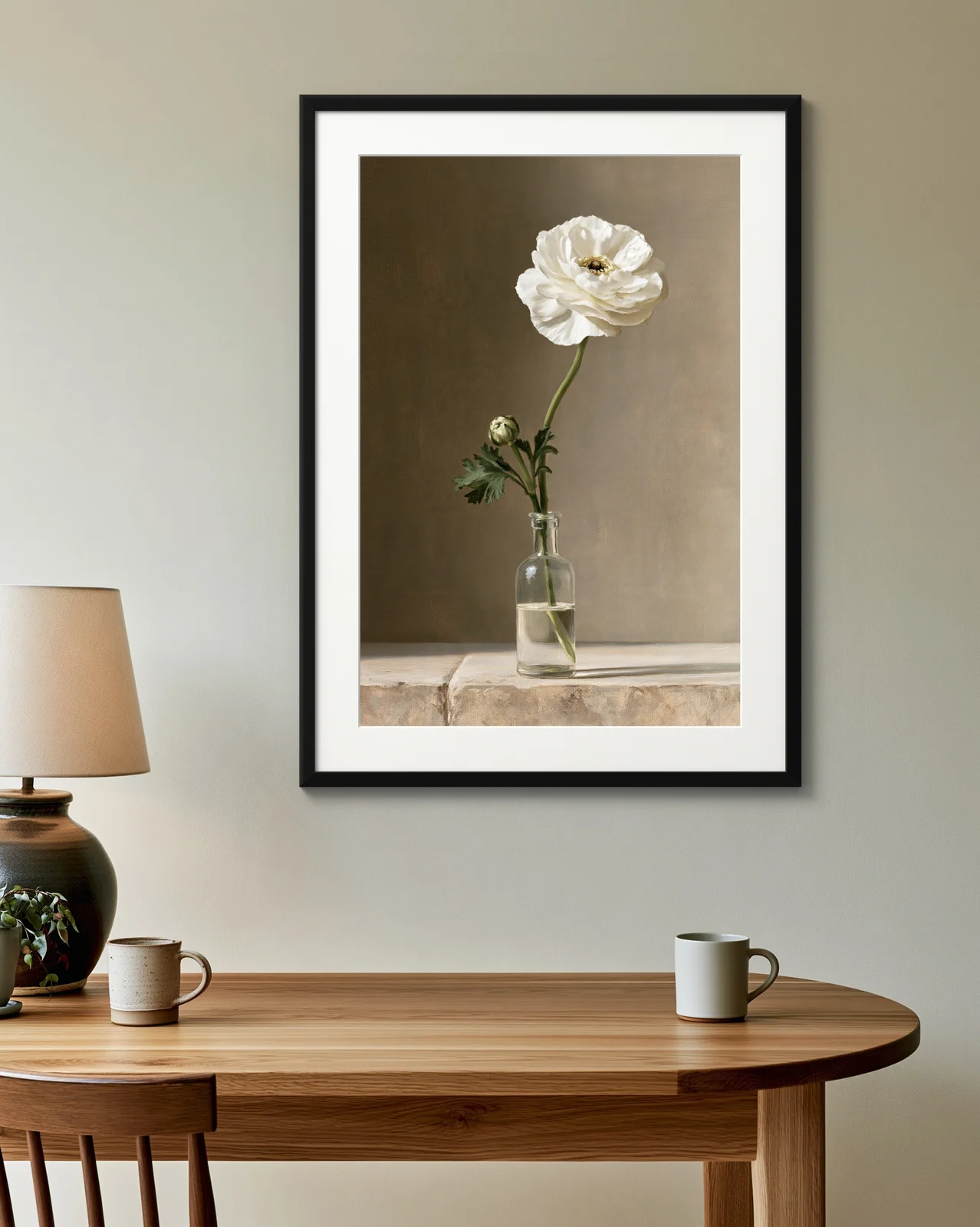
Three words, three meanings
| Term | What it means | What it doesn't tell the buyer |
|---|---|---|
| Giclée | An inkjet print made with pigment, archival-quality inks, on fine-art paper or canvas | Which paper, its weight, or whether the print is signed or limited |
| Poster (poster print) | A print format whose paper and process depend on the product | How long it lasts, unless the paper is named |
| Fine-art paper | Heavier, often uncoated, acid-free paper made for art reproduction | How it was printed; the ink matters as much as the paper |
Prodigi defines giclée as "fine art printing using pigment based, archival quality inks" on advanced inkjet printers, and credits the printmaker Jack Duganne with coining the term in 1991 (Prodigi, checked 2026-10-29). It describes a process. A print can be giclée on canvas, and a poster paper can be printed with pigment inks too.
What providers call their papers
Here is how four print-on-demand providers describe their wall art papers on their own pages (checked 2026-10-29):
| Provider | Papers and print types it names |
|---|---|
| Gelato | Classic matte 170 gsm, Premium matte 200 gsm and Archival matte 250 gsm (all uncoated); Classic and Premium semi-glossy, 170 and 200 gsm (coated silk). It offers giclée printing with fade-resistant pigment inks, and says its archival papers have no optical brightening agents |
| Printful | Enhanced Matte Paper, 189 g/m² and 10.3 mil thick, which it calls museum-quality; Premium Luster Photo Paper, a slightly glossy photo finish |
| Prodigi | Giclée with pigment-based archival inks on Epson printers using up to 12 colours, on fine-art papers, canvas and vinyl; its Enhanced Matte Art is a heavyweight fine-art material |
| Printify | Its guide describes giclée as pigment inks with a 12-colour archival gamut on acid-free cotton rag or archival matte paper of 230+ gsm, and names Fine Art Posters (Archival Matte) and Framed Fine Art Prints |
Sources: Gelato posters and framed posters and giclée and archival papers; Printful posters; Prodigi giclée; Printify giclée guide.
Notice that "museum-quality" means different things: Printful uses it for a 189 g/m² matte poster paper, while Gelato's heaviest archival paper is 250 gsm. These labels are marketing words, not a shared standard. The paper name and weight are what you can stand behind.
Matte, luster or semi-gloss: what buyers notice
- Matte reduces paper-surface sheen, but glazing can still reflect lamps or windows. It suits paintings, illustration and soft colours.
- Luster and semi-gloss have a soft sheen that deepens blacks and makes colours look richer. They suit photography, but can catch light when hung unframed opposite a window.
- Uncoated archival paper often looks a softer white. Gelato says its archival papers have no optical brightening agents, the additives that make paper look extra white (checked 2026-10-29).
- Weight (gsm) is grams per square metre. Heavier paper feels more substantial and lies flatter in a frame.
Words to use, words to avoid
Every claim in your title and description should be one your provider makes for the exact product you sell.
| Write this | Not this |
|---|---|
| "Printed on 250 gsm archival matte paper" | "Premium museum-grade giclée" on a standard poster |
| "Giclée print with pigment inks", when your provider says so for that product | "Giclée" for any print that looks good |
| "Semi-gloss photo paper, 200 gsm" | "High quality paper" |
| "Art print of an original painting" | "Original painting" for a print |
| "Frame not included" or the exact frame | A framed photo with no note, on an unframed product |
Etsy's image rules say all images must accurately reflect the item's true appearance, including colour, condition, scale and materials (Etsy Help, checked 2026-10-29). Your words should say the same thing as your photos.
Show the paper, not just the room
Room photos sell the art and the frame. They can't show paper weight or surface, so add proof from a sample:
- A room photo for the thumbnail, at a believable size.
- A framed close-up, if you sell it framed, so buyers see the frame and mat.
- A close-up of a sample print at an angle in daylight, showing the surface and any sheen.
- For unframed prints, a photo of the border and edge, so buyers see the margin they get.
Selling digital downloads? Don't describe a paper you don't supply; the buyer chooses the paper. Our guide to mockups for printable wall art covers how to present them, and framed prints with or without a mat covers the frame choice.
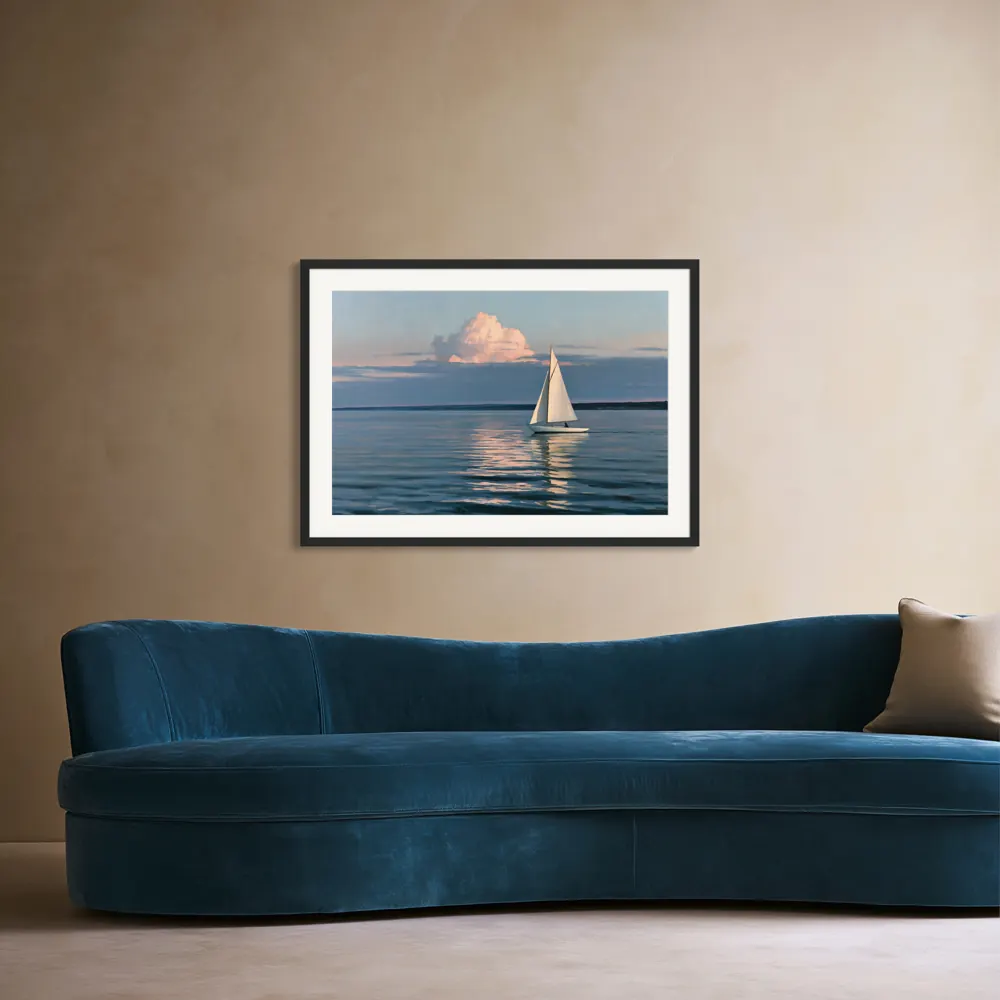
Example listing lines
- Poster: "Art print on 200 gsm premium matte paper. Unframed; white border. Sizes 12×16 to 24×36 in."
- Fine-art print: "Printed on 250 gsm archival matte paper, uncoated, with no optical brighteners. Unframed."
- Giclée: "Giclée print with pigment inks on [paper name from your provider]. Signed by hand on the back." (Only if you sign it.)
- Framed print: "Matte paper print in a black wood frame with a white mat. Print 8×10 in, frame 11×14 in."
Fill in the brackets from your provider's product page, and check your file’s resolution at the size you want with the print resolution checker.
Where WallMock fits
WallMock makes the room photos: your exact artwork as a framed print or framed poster, with or without a mat, in 500+ curated rooms, for a whole collection at once. Pair the room photos with a close-up of your sample for the paper. Try WallMock free with no sign-up and no card: up to three artworks in 8 sample rooms, as watermarked previews made on your device.
Read next: framed prints with or without a mat, mockups for printable wall art and the print resolution checker.
Sources
- Prodigi: What is giclée fine art printing?, checked 2026-10-29
- Gelato Support: Do you offer giclée prints, archival inks and papers?, checked 2026-10-29
- Gelato Support: Start selling posters and framed posters (paper types), checked 2026-10-29
- Printful: Custom posters (paper types), checked 2026-10-29
- Printify: Giclée print guide, checked 2026-10-29
- Etsy Help: Requirements and best practices for images, checked 2026-10-29