Start with the product you actually sell
A mockup is a product photograph made digitally. Before choosing a finish, write down the artwork size, visible frame width, mat opening and whether the product is paper or canvas. A convincing room cannot make an inaccurate product representation useful. If your supplier offers a narrow black frame, a broad ornate gold surround is not an interchangeable styling choice.
Four measurements, four different jobs
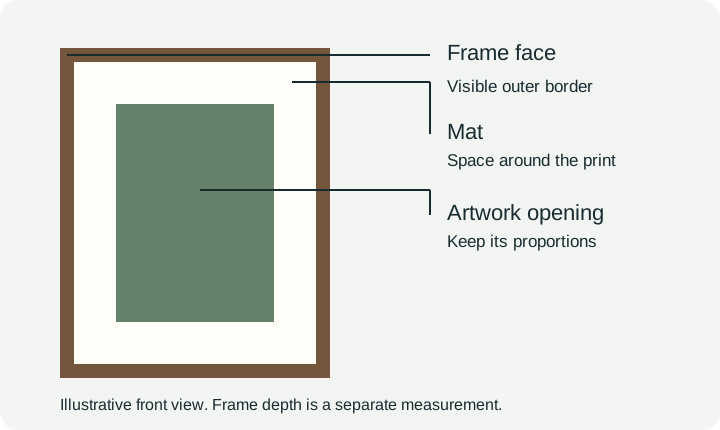
The frame face is the border visible from the front. Depth is how far the frame projects from the wall. A mat is the board around a paper print, inside the frame. A floating gap is the reveal between a canvas and its surrounding frame. Making a mat wider should not also make the frame face wider. Increasing depth should not turn a slim front border into a heavy one.
Compare finishes at the same artwork size
Keep the picture itself at the same size and position while comparing frames. Otherwise a smaller picture with a thicker border may appear to be a similar overall size, hiding the change. Check the four art edges against a fixed reference in the room. Then inspect the outer frame: does it feel proportional beside the furniture, and does it still fit entirely within the usable wall?
A simple worked example
Imagine a 20 × 30 inch print, a 2 inch visible mat on each side and a ½ inch visible frame face. A simplified front-view estimate is 25 × 35 inches overall: add twice the mat width and twice the frame face to each artwork dimension. A 1 inch face would make it 26 × 36 inches. Real frame rebates and mat overlap affect the finished measurement; use your supplier’s actual outer dimensions when accuracy matters.
Judge the whole scene and the corner
At listing-thumbnail size, the artwork should be easy to read and the frame should support its contrast. Then zoom in: corners should meet cleanly, the mat should remain distinct from the artwork, and the frame’s highlights and shadows should belong to the room. A pale print in a white mat can work beautifully, but inspect the boundary rather than assuming it will remain visible on every wall.
Use a deliberate shortlist
Try a restrained wood, black or white finish first. Add a metallic or decorative option only when it represents your product and serves the artwork. WallMock offers the product and finish combinations available in each reviewed room; this guide is not a promise that every frame style is currently available. Before export, compare a full scene, a close view and your supplier’s product photo.